China Visit Pictures

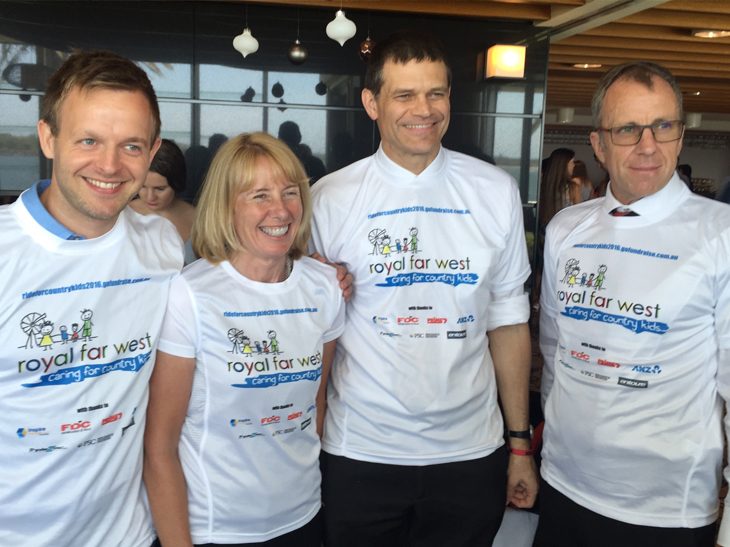
Unfortunately I wasn’t able to get into WordPress whilst overseas (and haven’t had time to do it until now) but thought I would upload a couple of pictures from Yangzhou University’s 110th Birthday celebrations a couple of weeks ago.  This was a stunning event with performances by staff and students of the university.  I met with the Presidents and VPs of our Chinese partner universities in Yangzhou and Shanghai.  A lot of goodwill around further collaboration based on the length of the relationship and certainly some interesting possibilities given the scale of growth in China.

Follow-Up on Strategic Positioning

I wanted to thank everyone for commenting on the previous blog entry.  To pick out some of themes from this:

Reputation:

  • I think we do need to think about how we wish to define reputation and this underlies my initial post and a number of the comments.  I think the key point for us is that our definition of reputation may not be the same as that for other universities.  Sandra Harding at JCU often quoted Coleridge in saying that universities need to “create the taste by which they are to be relished”.
  • Our campus network, and our ability to use this well, is a real strength.  We do rely on the critical mass generated by distance and online students to maintain healthy disciplines though.  It’s not clear to me that we are in fact losing market share to other distance providers yet (in fact the lateset data from Planning and Audit would suggest we aren’t), but there is no room for complacency on this score.  I think there is significant challenge from marketing-led providers such as OUA and we need to think how we will respond.

Teaching and Learning:

  • An interesting observation regarding whether we value quality teaching and learning.  Coming in from outside, it certainly seems that we do and that we have well-developed mechanisms to support it.  In particular, the work that has been done around the Discipline Review and the Annual Course Performance Reports is really good and all those involved should give themselves a pat on the back.  I recognise that the shift to the 60/30/10 workload model has sent stronger signals around the value of research but that needn’t to my mind necessarily diminish the value of teaching.
  • As a sector, we need to be much more thoughtful about what delivers a good quality educational experience.  This is not to suggest that we haven’t done a lot of work on this already but one of the frustrations for the Government is that whilst we are prepared to say what we don’t like about suggested ‘quality’ measures, we do not necessarily have better suggestions.

Research:

  • I think we need to think both about what research we should be doing and how we want to approach that research.  As noted, in terms of the ‘what’ I would prefer to couch this in terms of service to our communities and this raises the question of what are the most important needs of our communities?  There is never complete clarity about boundaries to research areas because universities are supposed to be about encouraging freedom of inquiry and therefore you always want to leave some room for creativity.  In terms of the ‘how’ there were some useful discussions over the last week at the Research Centre Directors’ retreat.  It seems to me that the current policy settings are driving improvements but we did discuss the need for the strategic investments via Research Centres and the Faculty Compacts to be amplifying the peaks as well as lifting the general level.

Economic Rationalism:

  • Finally, good to have the challenge to business speak and economic rationalism.  I guess in my view these are a lens through which to view university operations, but not the only one. Personally, I find such language a convenient means to discuss the business aspects of a university and as long as we all want to be paid to attend, those need to be honoured.  Having said that, no commercial entity has yet (as far as I’m aware) evolved into a true university so economic rationalism will only get you so far.  In my view, that’s why it’s important to understand the intellectual contribution we want to make to our communities, Australia and the world, and the economics and business decisions need to be in support of that.  Markets do have seductive power, and one of my concerns is that we not follow where they might lead unthinkingly.
  • On that score, a useful challenge about the primacy of ‘marketisation’ and it prompted me to wonder what a better way to phrase the question around student experience might be.  Perhaps the question ought to be: “How should we be so that we delight, excite and ignite our staff and students?”

Strategic Positioning

As noted in the last post, I want to use this blog to facilitate a collegial and hopefully innovative process to establish a clearer sense of where and what we want CSU to be in the future, and later what we need to do to get there. This will also be important in enhancing our current University Strategy 2011-2015.  I’d like to kick the discussion off with some context and a few points from my own perspective.

First the external climate and our strategic positioning, in which I would highlight relevant external influences:

  1. Competition. Much has been made of the demand-driven system for students in encouraging competition in the sector, and it has.  However, I think it’s worth noting that in the previous system we still had competition, but it was damped down by the Federal Government controlling numbers so there was quite a bit of lag between changes in demand and response.  The ability to change load quickly has freed up the thinking of all universities and it seems many universities are getting more aggressive and also thinking more broadly about institutional strategy.
  2. Funding/resourcing. Both Labour and Coalition are firm that there will be no significant new money for higher education from the public purse.  There are a couple of reasons for this.  One is the general pressure on national budgets and the other is that most politicians believe there are few votes in higher education in the general sense.  It is a significant political issues within electorates, and particularly rural and regional electorates.  My view would be that whilst we have not had everything we wanted following the Bradley Review (such as a 10% lift in base funding), and we have had some things we didn’t want, we have done pretty well out of the current government.  Not least it should be pointed out that they have funded significant expansion of the sector.  I would not realistically expect $/EFTSL to increase from here or at least not without having to work harder for it.
  3. Online Learning Bubble. Online learning has suddenly exploded as an issue and apparently College Presidents in the US are talking about little else.  This is on the back of initiatives such as the Khan Academy, MITx and of course everyone in the developed world’s access to bandwidth and technology.  I think it highly possible that there will be a global investment bubble in this area.

To turn to how we ought to position ourselves in relation to this, I think it is fairly simple.

  • First we need to be, to borrow a phrase from Michael Hammer, Easy To Do Business With (ETDBW).  In other words, we need to have systems and processes that encourage students in, rather than drive them away.  This is the aim of our Student Experience Plan in the 2011-15 Strategy although I think we might wish to review whether we have everything covered there.
  • Second, we need to have attractive, distinctive courses that transform people’s lives.  Attractiveness is something we have always thought about in higher education – will anyone want to study courses if we offer them?  Distinctiveness we have paid a bit less attention to but in a crowded and competitive market I think we need to make sure we have a clear answer to why someone should want to come and study with us.  Transformation we have aspired to, but I’m not sure whether we have focussed on this enough either.  There has been a tendency to focus on technical content rather than the life change that happens through studying a program.  Initiatives such as capstone programs and practice-based education are good initiatives in this space.  Again, the Course Profile Plan in the 2011-15 Strategy is focussed on this space.
  • Third, we need to lift our perception of quality and also demonstrate intellectual leadership for our communities and the nation.  I do not believe a university’s reputation rests solely on its research performance but it is a critical factor and we do need to improve it.  The Research Plan in the 2011-15 Strategy covers this space and the Faculty Compacts are a significant investment to this end. I like the term intellectual leadership which I think gives a better sense not only of developing knowledge through research but also disseminating that knowledge to students and engaging in shared learning with industry and community.

So, we have a strategic plan that covers the bases, what else is there to do?  I see everything in our current strategy as relevant and necessary, but we will be faced with a large number of choices in a potentially turbulent and deregulated market.  In this context, from my perspective we are still lacking clarity about our overall mission, institutional story, or narrative as I have called it.  This is because we are a complicated and diverse institution.  We have great on-campus facilities and experience but we are the largest provider of DE in the country.  We pride ourselves on our regional engagement but we also teach a lot of metropolitan students.  We have science and theology and we have policing and arts.  We have communities that range from the truly inland such as Dubbo through to the Coastal such as Port Macquarie or Sydney.  We have variously described ourselves as a university for inland Australia, a university for the professions, a university devoted to its regions, the largest distance education provider in the country, a university devoted to partnership and so on.  We are all those things and more, but I think we can find a more powerful expression of what we are truly about.

Some of the foundation work has been carried out through the strategy development process over the years and some through the brand development work completed last year.  I do not think we need to overturn what has already been done or to start from scratch but I would like to facilitate a conversation around this so that with a new Vice-Chancellor and two new Deputy Vice-Chancellors coming we can be sure we are all on the same page and focussed.

At the end, I don’t think we will have something as simple as a tagline but nor will we have something as complicated as we currently provide when asked for our Mission.  I don’t think this is something that can be simply dictated by the Vice-Chancellor so I would like to facilitate some broad discussion in its development over the coming months.

I am keen to hear your comments in response to this and future posts (use the ‘Follow this Blog’ tool to the top right of this page and you will get email updates).  I would also like to explore using online tools to gather information.  We are using a site called All Our Ideas to gather thoughts in this space.  If you would like to take part, please add your votes and own ideas about the things that shape CSU’s distinctive place in Australian higher education on our ideas page at …

***  http://www.allourideas.org/csu ***

Looking forward to your ideas and contributions.

En route to China

This post is being written on a plane to China to visit our university partners there and attend the 110th anniversary of Yangzhou university.  I’m very pleased to be travelling on an Airbus 380 for the first time as my father was part of the design team for the wings on the very first Airbus at the beginning of the 1970s.  Yes, I do know they have cracks in these ones; I’m sure he would be mortified if he were still alive (and appreciate the irony of the last part of that sentence).

Highlights since the last blog post include:

  • A visit to Goulburn campus to visit the NSW Police Academy.  Fantastic facilities there and really interesting staff.  Rosemary Woolston asks me which is the best School in the University and I tell her I’m not going to argue with the one that has guns.
  • Hosting NSW Legislative Council Members Steve Whan and Mick Veitch at the Orange Campus – a great opportunity to show off the Dental and Physio labs and talk to them about our plans.
  • The opening of the Port Macquarie Campus by Senator the Hon Chris Evans. This was a fabulous event with tremendous support from the community and my congratulations to all those involved in organising it.  [A particular thank you to the St Columba School Band who introduced the notion of having the Academic Procession arrive to some excellently played tracks from Miles Davis’ ‘Kind of Blue’.  This is a tradition I think we should continue (although I wouldn’t want to displace Don Alexander’s bagpipes in Bathurst).  On checking the track listing I think it was ‘All Blues’ although it might have been ‘Freddie Freeloader’ in which case perhaps they were being more ironic than I thought.]
  • Travelling to Nyngan to present our case for a medical school to the Western NSW Local Health District.
  • A Bathurst Regional Council hosted welcome for me with members of the local community at the Somerville Collection.
  • Opening the Environmental Boardwalk at Albury, attending the Albury Regional Consultative Committee meeting and having dinner with community leaders from Albury, Wodonga and Wangaratta.
  • Interviewing for the DVC (Academic) to replace Ross Chambers.
  • Attending the Universities Australia Plenary Meeting of Vice-Chancellors and Chancellors in Adelaide.
  • Attending my first Academic Senate meeting.

This has been further very useful information gathering and in particular it was good to finally meet staff at Goulburn and Albury.

As I mentioned in the last post, I am now past the three months of familiarisation and intend to move into the next phase.  Part of that will be to transmit more of my thoughts on our strategic positioning, and our future, to the university community and stakeholders.  This blog is part of that communication process and we will be promoting this more widely through the university community. I would welcome comments on these blog posts as the conversation develops.

Thanks and farewell to Nick Klomp

I have done this personally but I wanted to say a separate public thank you to Professor Nick Klomp and congratulate him on his appointment to the DVC Education role at University of Canberra.  Nick and I met some years ago on a Universities Australia leadership course and he was clearly someone of great intelligence, talent and energy.  There is no question that Nick has made an enormous contribution to CSU as well as being a credit to the institution.  Whilst I am very sad to see him go, the move will be great for Nick’s career and of course for UC.  We hope he won’t be a stranger to us after his move.

A Quick Catch Up

It has been far too long since my last blog post, although I have been putting out intermittent tweets as well.  It is in the nature of being in a new role that while it is ‘only’ about a month and a half since the last post, it feels like a lifetime.  The intervening period has been filled with a lot of travel and some more solid thinking about strategy for CSU.  To give some of the highlights through that time:

Canada

Towards the end of March I was invited to the Wellington Group meeting in Vancouver which is a semi-regular meeting of senior government officials and higher education leaders from English-speaking countries.  This was really interesting and it would be fair to say that all of those countries are facing the same issues of an ageing population and ensuring that education can promote innovation, social equity and economic productivity.  They are also struggling with resourcing higher education from the public purse to achieve those aims.  Another strong theme was the need for innovation in higher education and the question of whether this would come from public institutions or hungrier for-profit providers.  I think the key takeaway for me was that whilst there is a diversity of approach to higher education, no-one thinks they have a perfect system.  Australia is not doing too badly and people were particularly interested to hear about TEQSA and our national approach to quality.

As a side-trip before Vancouver I visited CSU Ontario in Burlington and really enjoyed meeting both staff and students there.  The students are a highly-motivated group and it was great to talk to some of them who will be undertaking placements in Dubbo later in the year.

Another positive was that Vancouver gave me an opportunity to practise acclimatising to the Bathurst winter by laying on sleet. Also interesting to note that Blockbuster in Canada has gone out of business because, with better broadband, everyone is renting movies online.

Technology in Tertiary Education

I was invited to speak to the Tech in Tertiary Ed Conference at the end of March at which I talked about technology and innovation generally, and how educational technology might serve, following Clayton Christensen’s work, as a disruptive innovation in higher education.  As noted above, it will be interesting to see where the private sector and international players go with this and what impact this has on traditional universities.  It does strike me that too often we have used technology to add work to the teaching and learning process, although I think we are getting more mature in our approach to this.

EIF Bid

Our Education Investment Fund bid for improved health facilities at Orange and Bathurst went through to the next round of application.  We were very appreciative of State Government support for this bid and of the work of our local members, and particularly Paul Toole from Bathurst, in achieving this outcome.

Port Macquarie

Operations at Port Macquarie are gaining momentum under the stewardship of Head of Campus Dr Muyesser Durer.  We are investigating site options for the permanent campus, as well as finalising the full course profile that we will offer there in the next few years.

PBE Summit

I spoke at the Practice Based Education Summit organised by our Education for Practice Institute in Sydney on the theme of standards and regulations and the challenges they provide.  Here I mused on the parallels between standards as used in engineering practice and as applied to higher education.  Overall I believe standards are neither inherently good nor bad, but that we need to ensure we use them appropriately to support quality but not drive out innovation.

Menindee

Two weekends ago I was fortunate to be invited along with other CSU staff to Menindee for a camp with Aunty Beryl Carmichael, an elder of the Ngiyeempaa people.  The country out to Menindee was spectacular after the rains, and listening to Aunty Beryl talk about her life and her culture was a very special experience.  Sunsets over Lake Pamamaroo and the view of the Milky Way from the campsite were magical.  We are very fortunate to have our focus on Indigenous culture as a university, and it seems to me there is much we could learn from the depth and resilience of Indigenous society.  If nothing else it gave me a chance to reflect on the importance of stories and traditions in cultural transmission and what that might mean for leadership at CSU.

Looking to the future

I think that brings things more or less up to date.  I have had a couple of weeks mostly in Bathurst which has given me the opportunity to catch up.  In particular, I have completed the three months I said I would take to familiarise myself with CSU and its processes.  As I have signalled at various gatherings, I do not think we need to make a left or right turn as an institution and for the most part we know our issues and are working on them.  I have shared some thoughts about tweaks we might make with the Senior Executive Committee and will be sharing those more broadly over the coming weeks.

Floods, Conferences and Communication

Two major themes for last week- disruption caused by flooding and  the Universities Australia Conference

Flooding from the unusually heavy rainfall caused various kinds of disruption last week, with the closure of the Wagga Wagga campus for one day.  My thoughts go out to communities now coping with the clean-up in Wagga and elsewhere. If the post-Cyclone Yasi experience is anything to go by, this is a tough time when the adrenaline of the disaster threat has passed, but there’s a lot of tedious mucky work to do in putting things back to where they were.

The worst that happened to me was not being able to visit CSU’s Albury Campus and a diversion through Grenfell and Forbes on the way back to Bathurst which was actually a nice thing to do.  Back in Bathurst, to borrow a joke of my late father-in-law’s, the road to Sydney was cut leaving the State Capital temporarily isolated but we understand they survived this OK.

The Universities Australia Conference was held in Canberra last week and featured addresses from Senators Evans http://tinyurl.com/6tz2wxr and Mason on Labor and Coalition higher education policy.  Under Labor, things will continue more or less as they are and the Government is pleased with the increase in student enrolments, particularly in regional areas.

Brett Mason http://tinyurl.com/7zn3xr4 was characteristically frank and, whilst it is clear that there would be changes under the Coalition, it is not yet clear what.  Senator Mason identified the three factors as  (1) quality and standards, (2) increased participation and (3) funding.  He is of the view that all three can’t continue as they are and that the Coalition would prioritise quality and standards.  It is not yet clear what else this might mean.

I chaired a session on Public Perceptions of Regional Universities which was well attended and seemed to go well. The final session of the conference was a Gruen Transfer style ‘The Pitch’ on selling higher education.  This had a hilarious introduction by Dan Gregory and two excellent pitches from the agencies.  In amongst the jokes though was the serious message that universities need to be creative and courageous in presenting themselves to the community.

Final comments are about this blog, my twitter feed and CSU’s new TV advert.  @KateMfD asked why VC’s tweet or blog?  Not sure if there is a generic answer, but a quick sketch of my job is to facilitate CSU to be the best it can be, to promote the university externally and to encourage innovation.  I think we need to embrace social media as a university if we are to stay relevant so I think I need to model that behaviour.  On the assumption that they can be useful means of communication, that ticks the first two boxes.  I’m going to be interested to see how this works out; these are my posts and my tweets so there will be a limit to the rate of transmission and ability to engage.

So, will finish by mentioning the TV advert that’s running across our regions at present http://fb.me/1snlJwZgU.  This is about raising the profile of CSU generally; one of the bits of feedback from the brand survey work last year was that we didn’t get out there and celebrate our achievements enough.  A TV advert is only one mechanism, but on previous experience it can be a very effective means of doing this.  Hope you enjoy it, look forward to hearing from you.

Follow

Get every new post delivered to your Inbox.

Join 850 other followers